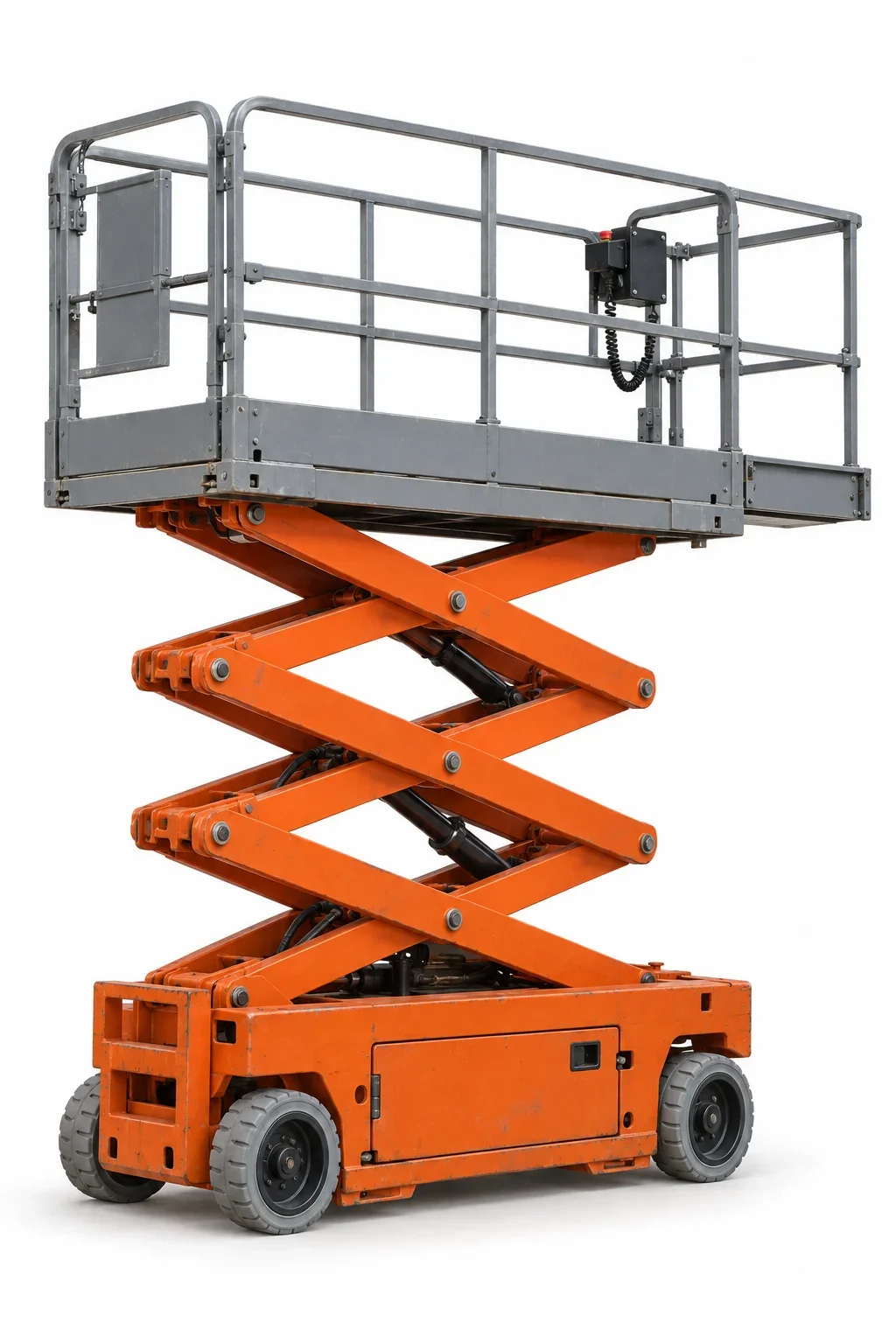
Match platform height to the task, not just the ceiling
- Identify the working elevation of lights, duct, cable tray, or sensors. Subtract safe clearance from overhead structures common in local industrial facilities to find the needed platform height.
- If the job requires outreach around conveyors or tooling, pivot to an articulating option at /boom-lift-rental/.
Floor bearing and access constraints in local facilities
- Many Huntsville interiors post slab ratings, mezzanine limits, and aisle width rules. Machine weight, wheelbase, and tire contact patch affect whether a unit can cross joints, floor coatings, and thresholds.
- Compact models navigate doorways and narrow turns between racks; wider platforms help when two-person work and material staging share the basket.
Power, runtime, and charging
- Battery capacity and duty cycle planning matter on long shifts. Charging location, cord routing, and downtime windows affect which unit class is practical for maintenance sequences.
Common use cases around Huntsville
- Sensor calibration, lighting replacement, and inspections in high-bay environments where vertical access is clear and floor conditions are controlled.
- Overhead installs in local distribution buildings where aisle widths and sprinkler clearances constrain machine width and deck extension use.
When an electric scissor isn’t the right fit
- Obstructions between the machine and the work point suggest a boom at /aerial-lift-rental/ or /boom-lift-rental/.
- Outdoor or partially enclosed spaces on unfinished ground are better aligned with /rough-terrain-scissor-lift-rental/.
Actual conditions, the selected unit’s instructions, and site procedures govern interior elevated work in Huntsville.