Projects across Huntsville use fencing for perimeter control, pedestrian separation, and equipment zones. Red clay turns slick and soft when wet, and the region’s subsurface conditions can undermine posts if loads concentrate at low points. The best layout considers wind exposure, grade changes, and how lifts and trucks will pass through.
Define the control goal first
Perimeter security, public separation, or equipment exclusion each drive different panel heights, gate types, and site-stability factors needs.
If the fence must sit below a work face or scaffold, confirm setback and overhead clearance to prevent conflicts with lifts and booms. See /aerial-lift-rental/ for typical reach paths.
Surface and footing in North Alabama soils
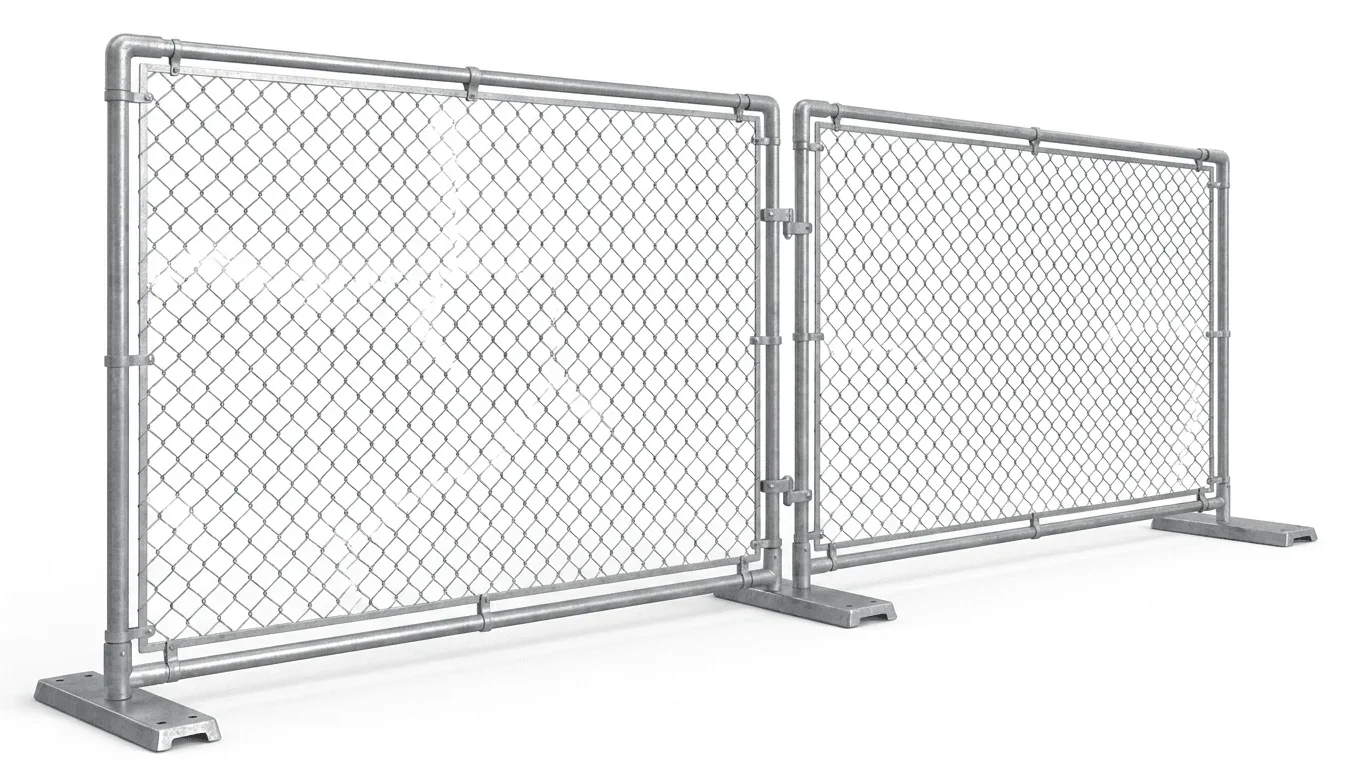
On saturated clay, freestanding panels need reliable site-stability factors and drainage so bases don’t skate or sink.
Where karst features are suspected, avoid concentrating footings on small points and check for recent backfill areas that may settle.
Access points and traffic
Map where forklifts, telehandlers, and delivery trucks will enter. Gates should align with the natural flow so equipment isn’t forced onto soft shoulders.
In tight industrial yards, stagger barricades to create clear pedestrian lanes separate from lift routes. Compare equipment turning needs at /forklift-rental/ and /telehandler-rental/.
Visibility and lighting
If fencing defines night work zones, confirm sightlines for light towers so glare doesn’t blind drivers approaching gates. Related planning: /generators-light-towers-rental/.
Weather exposure and site-stability planning options
Open, windy areas around large pads may require heavier site-stability factors or different footing than sheltered alleys between buildings. Actual conditions and manufacturer guidance govern site-stability planning methods.
What to confirm before you call
Purpose of the barrier, target height, and total run length
Ground type, drainage, and known subsurface issues
Number, width, and swing/slide style of gates
Proximity to overhead work and lighting layout
Equipment questions
Questions about Huntsville planning
Will freestanding fence panels hold on Huntsville’s red clay after heavy rain?
Only if the bases are supported and drained. Saturated clay can let bases slide or sink. site-stability factors amount, panel type, and site drainage all affect stability, and actual conditions govern the decision.
How wide should gates be for equipment access at local industrial sites?
Measure the widest machine and its turning radius, then add clearance for swing or slide hardware. Forklifts and telehandlers often need more width than their spec sheet suggests once the load is accounted for.
Can fencing run under a boom or scissor lift work area?
Yes, but maintain a setback that accounts for lift reach and swing, and keep gate placement clear of typical approach paths. See /boom-lift-rental/ and /electric-scissor-lift-rental/ for common geometries to consider.