Determine if the task is straight up
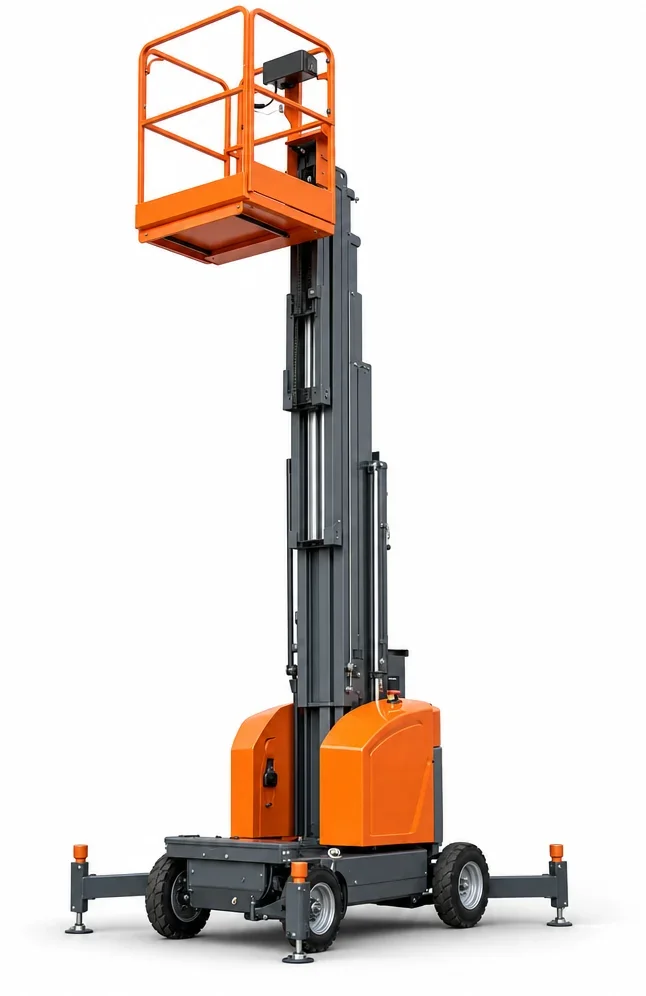
Mast lifts travel through doorways and between equipment where wider platforms cannot. They work best when the task sits directly overhead without a horizontal offset. If the work is offset or sits behind ductwork or rails, compare /articulating-boom-lift-rental/.
Floor loading and access path
Many interiors around Huntsville use light-finish slabs or mezzanine decks with posted ratings. Check the narrowest doorway, the tightest turn, and the most limited floor rating along the route—not just at the work point. Non‑marking tires and low point loads help protect sensitive surfaces in clean production spaces.
When to step up or over to another category
- Straight-up maintenance under 30–40 feet with tight aisles: Vertical masts are often the smallest footprint. If you need a larger platform and straight vertical travel, see /electric-scissor-lift-rental/.
- Exterior or uneven approaches: Consider /rough-terrain-scissor-lift-rental/ or a boom category if slopes and obstacles are part of the approach.
- High-bay fixtures beyond mast range: /telescopic-boom-lift-rental/ or /boom-lift-rental/ when you can line up in open bays.
Local conditions that change selection
Seasonal moisture on thresholds and docks can make transitions slick. Short wheelbases help with tight turns but can feel different on ramps; actual site procedures and the selected unit’s instructions govern use on slopes and lifts. In facilities with security screening, ensure the machine’s dimensions match any scanning or gate equipment clearances to avoid turn‑back at entry.
Typical applications in Huntsville
- Inventory sensor maintenance between rack lines.
- Light fixture swaps under overhead utilities in production corridors.
- Signage and IT cabling in offices connected to industrial floors.