Ground conditions drive the selection
- Red clay can pump and shear under load when saturated. That increases the need to understand ground-bearing capacity before committing to platform height and width.
- Slopes, ruts, and construction debris further influence tire choice and wheelbase. A larger footprint and rated gradeability help approach work faces safely when site paths are uneven.
Work geometry: vertical reach vs. obstacles
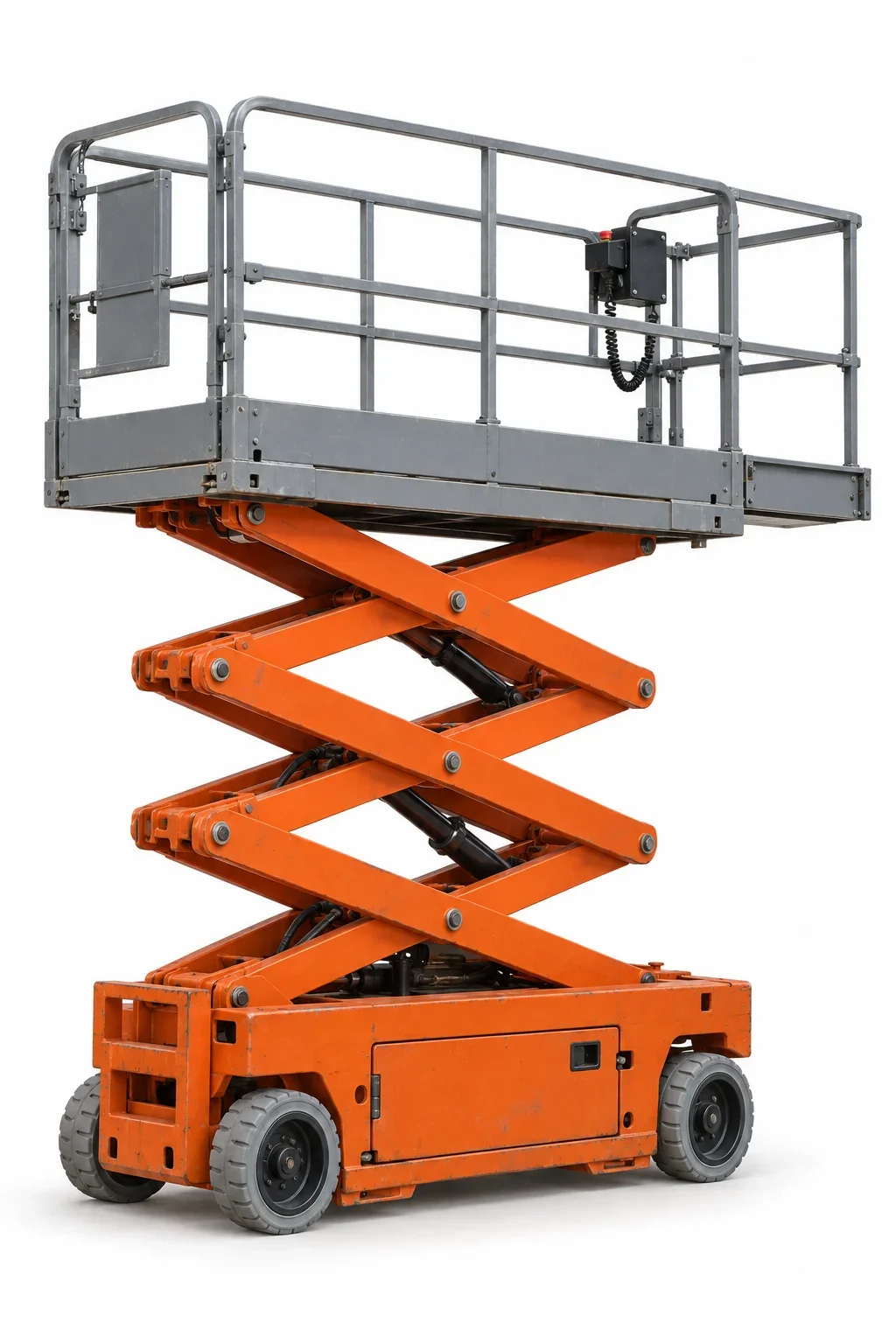
- If the platform can sit directly below signage, fascia, or glazing, a rough‑terrain scissor is efficient.
- If the task sits behind parapets, overhangs, or utilities, a boom at /boom-lift-rental/ or /aerial-lift-rental/ may fit better.
Weather and scheduling in the regional climate
- After storms, some areas over karst-influenced terrain require extra scrutiny of subsurface conditions to avoid setting up over void-prone ground.
- Wind exposure on open pads affects practical platform heights and material staging on the deck.
Common Huntsville applications
- Exterior envelope work on industrial sites before paving is complete.
- Site lighting, signage, and utility runs along gravel or compacted fill.
Alternatives if the site tightens up
- Once paving and interior slabs are finished, an electric unit at /electric-scissor-lift-rental/ may provide quieter operation and smaller dimensions for final close-out.
Actual conditions, the selected unit’s instructions, and site procedures govern exterior elevated work on North Alabama jobsites.