Work in Huntsville spans high-bay aerospace facilities, advanced manufacturing floors, and rough outdoor laydown yards. That mix creates two distinct planning paths: clean, slab-on-grade indoor work with strict power and noise limits, and exterior tasks on red clay that turns slick after rain with occasional karst concerns. The route from staging to task often decides the category before height or capacity does.
Start with task position
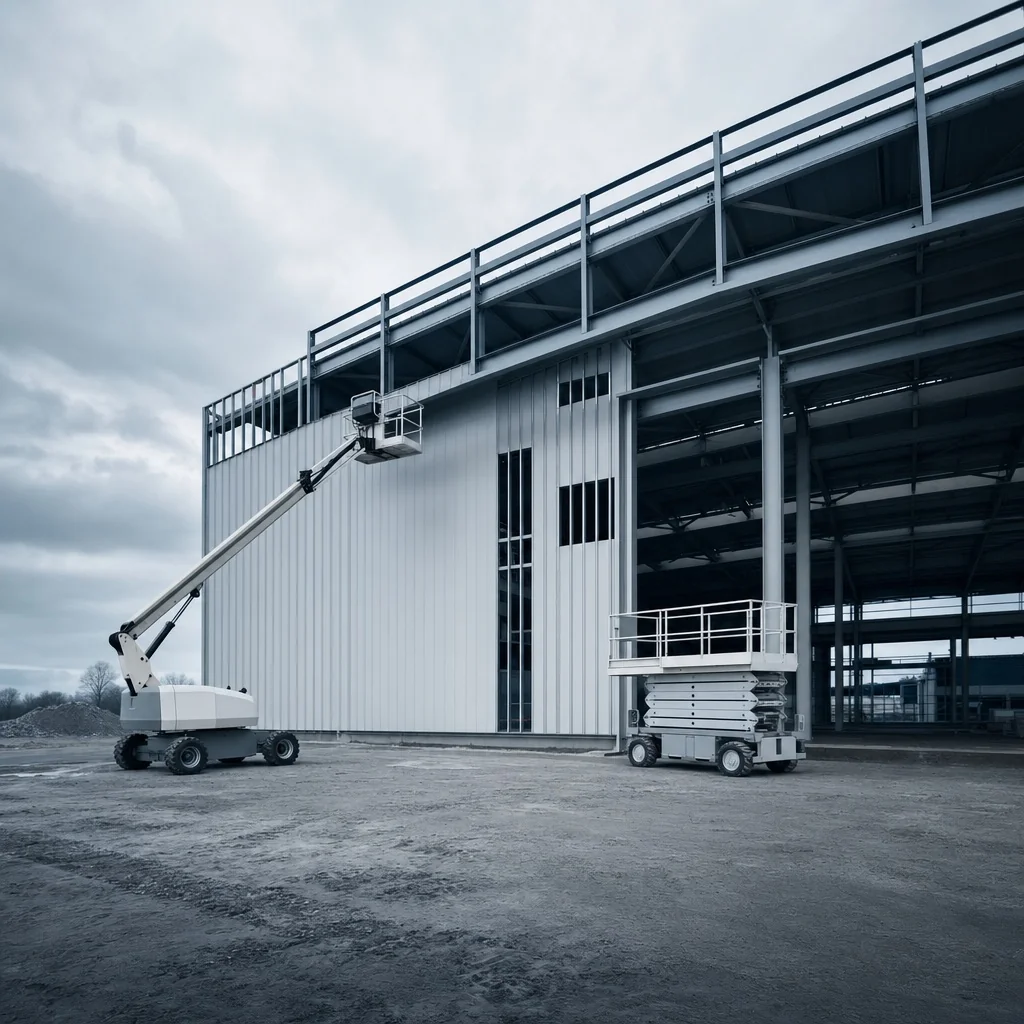
Can the machine sit directly under the task? If yes, scissor lifts and vertical masts are efficient on good slabs. Explore /electric-scissor-lift-rental/ and /vertical-mast-lift-rental/.
If the task is offset or obstructed, booms provide reach. See /boom-lift-rental/, /articulating-boom-lift-rental/, and /telescopic-boom-lift-rental/ for common geometries.
Height and envelope
High-bay maintenance typical of “Rocket City” facilities pushes working height while still demanding indoor-friendly powertrains. Electric scissors and mast lifts fit where floor loading and aisle width allow.
Outdoor steel work or site lighting often requires boom articulation or telescopic reach over laydown obstacles.
Surface and subsurface
On saturated red clay, rough-terrain scissors and booms with appropriate tires and leveling features are commonly selected, but only within the machine’s limits and site procedures.
In areas with possible subsurface voids, verify ground-bearing capacity before positioning any aerial device.
Route and access
Measure door widths, thresholds, ramps, and turns between staging and the workface. Many indoor routes in local industrial buildings are narrower than the task area itself.
For exterior work, confirm slope and drainage along service roads before towing light towers or positioning booms.
Materials handling interface
If lifts will place pallets or long parts, coordinate with /forklift-rental/ or /telehandler-rental/ handling plans so aisle widths and gate positions match the load geometry.
Site products that complete the plan
Temporary lighting and power: /generators-light-towers-rental/
Perimeter and pedestrian control: /temporary-fencing-barricades-rental/
Secure staging near the workface: /storage-containers-rental/
What to confirm before you call
Working height, outreach, and ability to sit below the task
Surface type, slope, and ground-bearing capacity
Route constraints from delivery point to task
Power, noise, and indoor air requirements
Handling needs for tools and materials
Equipment questions
Questions about Huntsville planning
What makes indoor work in Huntsville different from a typical warehouse job?
High-bay facilities tied to aerospace and manufacturing often require cleaner powertrains, tighter floor load limits, and careful route planning through controlled areas, even when the working height is similar.
How does red clay affect the choice between scissor and boom lifts outdoors?
On soft, slick surfaces after rain, rough-terrain capability and leveling become important. Whether a scissor or boom fits depends on if the machine can sit under the task and the ground’s ability to support point loads.
Do I need site products as well as a lift for night work?
Often yes. Lighting, power, fencing, and storage near the workface reduce travel and improve visibility. See /generators-light-towers-rental/, /temporary-fencing-barricades-rental/, and /storage-containers-rental/ for planning details.